

For high-net-worth commercial real estate investors, few tax strategies deliver as much immediate financial impact as a cost segregation study. By reclassifying building components into shorter depreciation schedules, investors can accelerate hundreds of thousands of dollars in deductions into the early years of ownership, dramatically improving cash flow and reducing taxable income.
Yet despite its power, cost segregation remains underutilized. Many investors either don’t know it exists or assume it’s only worthwhile for the largest properties. The reality is that any commercial property valued at $1 million or more is almost certainly a strong candidate, and many properties well below that threshold qualify as well.
This guide breaks down exactly how cost segregation studies work, the financial mechanics behind accelerated depreciation, and a detailed case study showing the dollar-for-dollar impact on a $2 million apartment building. Whether you’re acquiring your first commercial asset or expanding a multifamily portfolio, understanding cost segregation is essential to maximizing your after-tax returns.

What Is a Cost Segregation Study?
A cost segregation study is an engineering-based analysis that identifies and reclassifies personal property assets and land improvements from the building structure. The objective is to move as many components as possible from the standard 27.5-year (residential) or 39-year (commercial) depreciation schedule into shorter recovery periods of 5, 7, or 15 years.
Under the Internal Revenue Code, a building purchased for investment purposes must be depreciated over its assigned recovery period. However, the IRS recognizes that not every component of a building has the same useful life. Carpeting, appliances, decorative fixtures, parking lots, and landscaping all wear out far faster than the structural shell. A cost segregation study identifies these components and assigns them to the correct, shorter depreciation category.
The Four Asset Categories
A cost segregation study typically reclassifies building components into four primary categories:
- 5-Year Property: Carpeting, appliances, certain electrical systems dedicated to equipment, decorative lighting, window treatments, and specialized plumbing fixtures. These assets often represent 10-20% of a building’s depreciable basis.
- 7-Year Property: Office furniture, certain machinery, and specialized equipment permanently installed in the property. This category typically accounts for a smaller portion but can be significant in office and industrial assets.
- 15-Year Property: Land improvements including parking lots, sidewalks, landscaping, fencing, signage, stormwater systems, and exterior lighting. For properties with significant site work, this category can represent 5-15% of total basis.
- 27.5 or 39-Year Property: The structural components that remain on the standard schedule, including the building shell, permanent walls, HVAC ductwork integral to the structure, and the roof system.
Legal Foundation and IRS Guidance
Cost segregation is firmly grounded in the tax code. The landmark 1997 case Hospital Corporation of America v. Commissioner established that taxpayers could use engineering studies to segregate building costs. Since then, the IRS has published an Audit Techniques Guide for Cost Segregation that outlines the methodology and standards for quality studies.
The IRS does not require a specific format, but the most defensible studies follow the detailed engineering approach, which involves a physical inspection of the property and a component-by-component analysis. Studies prepared by qualified engineering firms affiliated with organizations like the American Society of Cost Segregation Professionals (ASCSP) carry the most weight in the event of an audit.
The Power of Accelerated Depreciation and Bonus Depreciation
Understanding cost segregation requires a clear grasp of how depreciation works as a tax tool and why accelerating it creates such significant economic value.
Standard Depreciation: The Baseline
Under standard straight-line real estate depreciation, a commercial building is depreciated over 39 years and a residential rental property over 27.5 years. For a $2 million building (excluding land), this translates to annual depreciation deductions of roughly $51,282 for commercial or $72,727 for residential.
While these deductions are valuable, they’re spread thinly across decades. For an investor in the 37% federal tax bracket, the annual tax savings on a $72,727 deduction is approximately $26,909. Useful, but far from transformative.
Accelerated Depreciation Through Cost Segregation
Cost segregation changes this equation by front-loading depreciation deductions. When a study reclassifies 20-30% of a building’s value into 5-year, 7-year, and 15-year property, the investor can claim substantially larger deductions in the early years of ownership.
The economic principle at work is the time value of money. A dollar saved in taxes today is worth more than a dollar saved in taxes fifteen years from now. By accelerating deductions, the investor effectively receives an interest-free loan from the government, which can be redeployed into additional acquisitions, capital improvements, or debt reduction.
Bonus Depreciation: The Multiplier Effect
Bonus depreciation supercharges cost segregation. Under the Tax Cuts and Jobs Act (TCJA) of 2017, qualifying assets placed in service received 100% bonus depreciation through 2022. The phase-down schedule reduces that allowance by 20 percentage points each year:
- 2023: 80% bonus depreciation
- 2024: 60% bonus depreciation
- 2025: 40% bonus depreciation
- 2026: 20% bonus depreciation
- 2027 and beyond: 0% (unless extended by Congress)
Even with reduced bonus depreciation percentages, cost segregation remains highly valuable. The combination of shorter recovery periods and partial bonus depreciation still generates first-year deductions many times larger than standard straight-line depreciation alone. Investors who act sooner capture more of the remaining bonus depreciation before the phase-down completes.
Interaction with Passive Activity Loss Rules
There’s an important caveat: accelerated depreciation generates larger passive losses, and passive losses can only offset passive income unless the investor qualifies as a Real Estate Professional under IRS rules. For investors with substantial rental income or those who meet the Real Estate Professional Status (REPS) requirements, cost segregation deductions can offset active income, including W-2 wages and business profits. For a deeper look at how these deductions interact with your overall tax strategy for real estate investors, plan with your CPA before commissioning a study.
Case Study: $2M Apartment Building
Let’s walk through a realistic example to illustrate the financial impact of a cost segregation study on a 24-unit apartment building acquired for $2,500,000.
Property Profile
- Purchase Price: $2,500,000
- Land Value: $500,000 (20%)
- Depreciable Basis: $2,000,000
- Property Type: 24-unit multifamily residential
- Year Acquired: 2026
- Investor Tax Bracket: 37% federal + 5% state = 42% combined
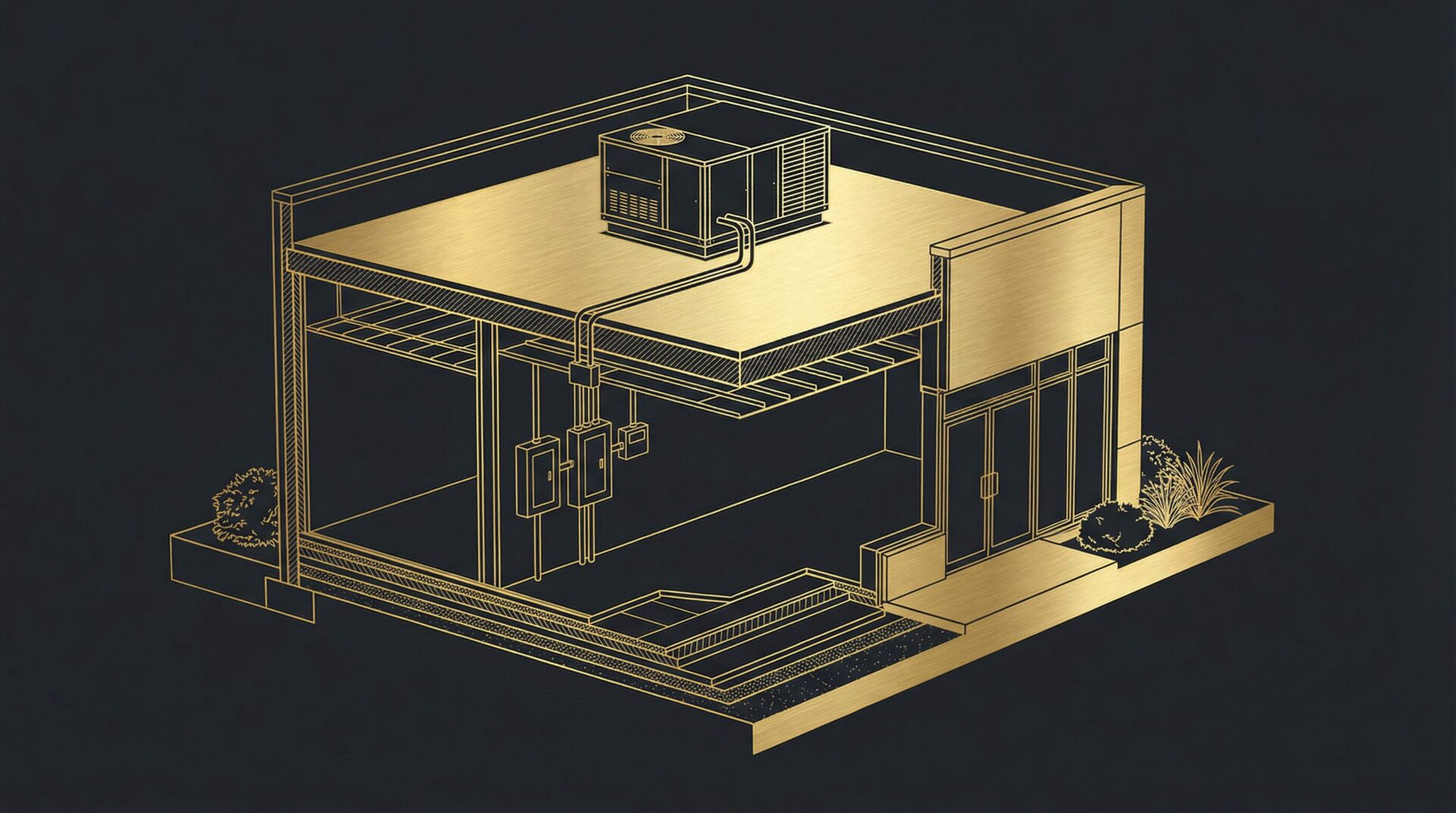
Cost Segregation Reclassification Results
The engineering study identifies the following reclassifications from the $2,000,000 depreciable basis:
- 5-Year Property: $320,000 (16%) — Carpeting, appliances, cabinetry, decorative lighting, window treatments
- 7-Year Property: $40,000 (2%) — Furniture, specialized equipment
- 15-Year Property: $200,000 (10%) — Parking lot, landscaping, sidewalks, fencing, exterior lighting
- 27.5-Year Property: $1,440,000 (72%) — Remaining structural components
Year One Depreciation Comparison
The following table compares first-year depreciation under the standard method versus cost segregation with 2026 bonus depreciation (20%):
| Category | Standard Depreciation (Year 1) | Cost Segregation (Year 1) |
|---|---|---|
| 5-Year Property ($320,000) | $0 (included in 27.5-yr) | $108,800 (20% bonus = $64,000 + MACRS on remainder) |
| 7-Year Property ($40,000) | $0 (included in 27.5-yr) | $12,571 (20% bonus = $8,000 + MACRS on remainder) |
| 15-Year Property ($200,000) | $0 (included in 27.5-yr) | $50,667 (20% bonus = $40,000 + MACRS on remainder) |
| 27.5-Year Property | $72,727 (full $2M basis) | $52,364 ($1.44M remaining basis) |
| Total Year 1 Depreciation | $72,727 | $224,402 |
| Tax Savings at 42% | $30,545 | $94,249 |
| Additional Tax Savings | — | $63,704 |
In this scenario, cost segregation generates $224,402 in first-year depreciation compared to $72,727 under the standard method. That’s a 3x increase in Year 1 deductions, translating to approximately $63,704 in additional tax savings in the first year alone.
Five-Year Cumulative Impact
Over the first five years, the cumulative difference becomes even more striking. The accelerated schedule front-loads approximately $480,000 in additional depreciation compared to the standard method. At a 42% combined tax rate, this represents roughly $201,600 in tax savings that the investor can redeploy during the highest-risk period of ownership when capital improvements and stabilization efforts require the most cash.
Cost of the Study vs. Return
A quality cost segregation study for a property of this size typically costs between $8,000 and $15,000. Even at the high end, the return on investment is extraordinary: $63,704 in first-year additional tax savings against a $15,000 study cost represents a 4.2x return. Over five years, the ROI approaches 13x.
This is why cost segregation is widely regarded as one of the highest-ROI tax strategies available to commercial real estate investors.
The Process: What to Expect from a Cost Segregation Study
Understanding the process helps investors set proper expectations and choose the right firm. A well-executed cost segregation study follows a structured methodology that holds up under IRS scrutiny.
Step 1: Preliminary Assessment
Before commissioning a full study, most firms offer a free preliminary assessment. You’ll provide the property type, purchase price, acquisition date, and any major improvement details. The firm runs a preliminary analysis to estimate the potential tax benefit and determine whether the study cost is justified. As a general rule, properties with a depreciable basis above $750,000 typically generate enough reclassifiable value to warrant the study.
Step 2: Data Collection and Site Inspection
The engineering team collects key documents including the purchase agreement, settlement statement (HUD-1 or closing disclosure), building blueprints, appraisals, and any construction invoices or improvement records. A qualified engineer then conducts an on-site inspection of the property, photographing and documenting every component that may qualify for reclassification.
The physical inspection is a critical differentiator between quality studies and the less defensible “desktop” or “estimate-based” approaches. The IRS Audit Techniques Guide specifically identifies the detailed engineering approach as the most reliable methodology.
Step 3: Engineering Analysis and Cost Allocation
Using the inspection data, construction cost databases, and engineering judgment, the firm allocates the depreciable basis across the applicable asset categories. Each component is mapped to its correct Modified Accelerated Cost Recovery System (MACRS) class life. The analysis accounts for local construction costs, building quality, and property-specific factors that affect component values.
Step 4: Report Delivery and Tax Filing
The firm delivers a comprehensive report that includes the methodology, asset classifications, cost allocations, and supporting documentation. This report is designed to withstand IRS audit scrutiny. Your CPA then uses the report to file the appropriate depreciation schedules, typically by filing Form 3115 (Application for Change in Accounting Method) if the study is being applied to a property already in service.
Step 5: Lookback Studies for Existing Properties
One of the most powerful aspects of cost segregation is that it can be applied retroactively. If you acquired a property years ago and never performed a study, you can commission one now and claim all the missed accelerated depreciation in a single tax year through a “catch-up” depreciation deduction using Form 3115. There’s no need to amend prior returns. This makes cost segregation relevant to your entire portfolio, not just new acquisitions.
Is a Cost Segregation Study Worth It for Your Property?
While cost segregation is broadly applicable, certain property types and investor situations generate the highest returns. Here’s how to evaluate whether a study makes sense for your portfolio.
Best Candidates for Cost Segregation
- Multifamily properties (apartments, student housing): High percentage of reclassifiable personal property including appliances, flooring, and cabinetry in every unit. Typically 20-30% reclassification rates.
- Office buildings: Specialized electrical, telecom wiring, decorative finishes, and built-in cabinetry often yield 15-25% reclassification.
- Retail properties: Tenant improvements, specialized lighting, storefront systems, and signage can represent 15-20% of basis.
- Industrial and warehouse: Specialized electrical systems, heavy-duty flooring, loading docks, and site improvements typically yield 10-20% reclassification.
- Hotels and hospitality: Furniture, fixtures, and equipment (FF&E) in guest rooms, restaurants, and common areas often push reclassification rates above 30%.
- New construction or major renovations: The most detailed cost data is available during construction, making the study more precise and often more valuable.
When a Study May Not Be Worth It
Cost segregation is generally not cost-effective for properties with a depreciable basis below $500,000, raw land without improvements, or properties you plan to sell within one to two years (since depreciation recapture under Section 1250 will offset some of the benefit at sale). Additionally, investors with no passive income and no path to Real Estate Professional Status may find that the accelerated deductions create suspended passive losses that provide no immediate tax benefit.
Choosing a Cost Segregation Firm
Quality matters enormously in cost segregation. A poorly executed study can trigger an audit or, worse, fail to identify all reclassifiable components, leaving tax savings on the table. When evaluating firms, look for the following:
- Engineering credentials: The team should include licensed professional engineers or construction cost specialists.
- ASCSP membership: Firms affiliated with the American Society of Cost Segregation Professionals adhere to industry standards and best practices.
- On-site inspection: Avoid firms that offer “desktop” studies without a physical property inspection.
- Audit defense guarantee: Reputable firms stand behind their work and will assist with IRS inquiries at no additional cost.
- Experience with your property type: Specialization in your asset class (multifamily, office, industrial) ensures the firm knows exactly which components to target.

Depreciation Recapture: The Trade-Off
No discussion of cost segregation is complete without addressing depreciation recapture. When you sell a property, the IRS recaptures depreciation previously claimed. For real property (27.5 or 39-year assets), recapture is taxed at a maximum rate of 25%. For personal property (5, 7, and 15-year assets), recapture is taxed at ordinary income rates.
This means accelerated depreciation doesn’t eliminate taxes; it defers them. However, deferral has significant economic value because of the time value of money. Additionally, many investors mitigate recapture entirely through a 1031 exchange, deferring both capital gains and depreciation recapture indefinitely by rolling proceeds into a replacement property.
Integrating Cost Segregation into Your Overall Strategy
Cost segregation works best as part of a comprehensive tax strategy rather than a standalone tactic. Coordinate with your CPA to evaluate how accelerated deductions interact with passive activity limitations, your current income level, and planned disposition strategies. The most sophisticated investors time cost segregation studies to coincide with high-income years, maximizing the tax rate at which deductions are claimed.
For investors building a diversified commercial real estate portfolio, cost segregation should be standard operating procedure on every acquisition. The upfront cost of the study is nominal compared to the six-figure tax deferrals it consistently delivers.
Frequently Asked Questions
How much does a cost segregation study cost?
Study fees typically range from $5,000 to $15,000 for most commercial properties, depending on the property size, complexity, and location. Larger or more complex properties such as hotels, medical facilities, or mixed-use developments may cost more. The fee is fully tax-deductible as a business expense, and the return on investment typically ranges from 5x to 15x the study cost in the first year alone.
Can I do a cost segregation study on a property I purchased years ago?
Yes. A lookback study allows you to claim all the accelerated depreciation you missed in a single year by filing IRS Form 3115 (Change in Accounting Method). This is an automatic change that does not require IRS approval. You do not need to amend prior tax returns. The cumulative catch-up deduction, known as a Section 481(a) adjustment, is claimed in the current tax year, making lookback studies especially valuable for long-held properties with years of unclaimed accelerated depreciation.
Will a cost segregation study trigger an IRS audit?
A properly conducted cost segregation study does not increase your audit risk. The IRS has acknowledged cost segregation as a legitimate tax strategy, and the Audit Techniques Guide provides clear standards for acceptable studies. The risk of audit issues arises primarily from low-quality studies that lack engineering support or use unsupported allocation methods. Choosing an ASCSP-affiliated firm that performs on-site inspections and provides detailed engineering reports minimizes audit risk substantially.
What happens to accelerated depreciation when I sell the property?
When you sell, the IRS recaptures previously claimed depreciation. Real property depreciation is recaptured at a maximum 25% rate, while personal property depreciation (5, 7, and 15-year assets) is recaptured at ordinary income rates. However, most commercial real estate investors use a 1031 exchange to defer both capital gains and depreciation recapture by reinvesting sale proceeds into a replacement property. With proper planning, depreciation recapture can be deferred indefinitely across successive exchanges.
Is cost segregation still worth it with bonus depreciation phasing down?
Absolutely. Even without any bonus depreciation, cost segregation delivers substantial value by moving assets from 27.5 or 39-year schedules to 5, 7, and 15-year schedules. The MACRS accelerated depreciation method (200% declining balance for 5 and 7-year property, 150% declining balance for 15-year property) generates significantly larger deductions in early years compared to straight-line depreciation. Bonus depreciation amplifies the benefit, but it is not the sole driver of value. Investors should not wait for potential legislative extensions; the study pays for itself many times over under any bonus depreciation scenario.

