

For high-net-worth commercial real estate investors, depreciation is one of the most powerful—and most misunderstood—tools in the tax code. It allows you to deduct the cost of an income-producing property over its useful life, reducing your taxable income year after year, even as the property appreciates in market value. The result is a legal divergence between economic reality and tax reality that sophisticated investors exploit to build generational wealth.
But depreciation is not free money. It creates a future tax liability through a mechanism called depreciation recapture, and failing to plan for it can turn a profitable disposition into a painful tax event. This guide walks you through the mechanics of real estate depreciation, the math behind the calculations, the recapture trap that catches unprepared investors, and the strategies that preserve your capital when it matters most.
What Is Depreciation and Why Does It Matter?
Depreciation is a non-cash tax deduction that accounts for the gradual wear and tear, deterioration, or obsolescence of a tangible asset. In the context of real estate, the IRS allows property owners to deduct a portion of their building’s cost each year over a predetermined recovery period. Land is never depreciable—only the structure and its improvements qualify.
What makes depreciation uniquely powerful in real estate is the disconnect it creates between cash flow and taxable income. Consider an investor who collects $500,000 in annual net operating income from a commercial property. If that investor claims $200,000 in depreciation, the taxable income drops to $300,000—even though the full $500,000 remains in the bank. That $200,000 deduction generates real tax savings without requiring any out-of-pocket expense.
For investors in the top federal bracket, depreciation can shield income at rates exceeding 37%, and when combined with state taxes, the effective savings per dollar of depreciation can exceed 45 cents in high-tax jurisdictions like California or New York. Over the life of a commercial property, this compounds into hundreds of thousands—or millions—of dollars in deferred taxes.
The Phantom Income Shield
Real estate professionals—those who materially participate in their rental activities and meet the IRS’s 750-hour threshold—can use depreciation losses to offset not just rental income, but active income from businesses and wages. This is a significant advantage that most passive investors do not have. If you qualify as a real estate professional, depreciation becomes an even more aggressive tool for reducing your overall tax burden.
Even passive investors benefit, though their losses are subject to the passive activity loss rules under IRC Section 469. Unused passive losses carry forward and can be applied against future passive income or released upon a fully taxable disposition of the property.
The Key Terms: MACRS, Depreciable Basis, and Useful Life
Before running any calculations, you need to understand three foundational concepts that govern how real estate depreciation works under the current tax code.
Modified Accelerated Cost Recovery System (MACRS)
The Modified Accelerated Cost Recovery System (MACRS) is the depreciation framework established by the Tax Reform Act of 1986 and still in effect today. It dictates recovery periods, conventions, and methods for virtually all depreciable assets placed in service in the United States.
Under MACRS, real property uses the straight-line method with the mid-month convention. This means the IRS assumes you placed the property in service at the midpoint of the month you acquired it, regardless of the actual date. So a commercial building purchased on March 3 gets the same first-year depreciation as one purchased on March 28.
The two critical recovery periods for real estate investors are:
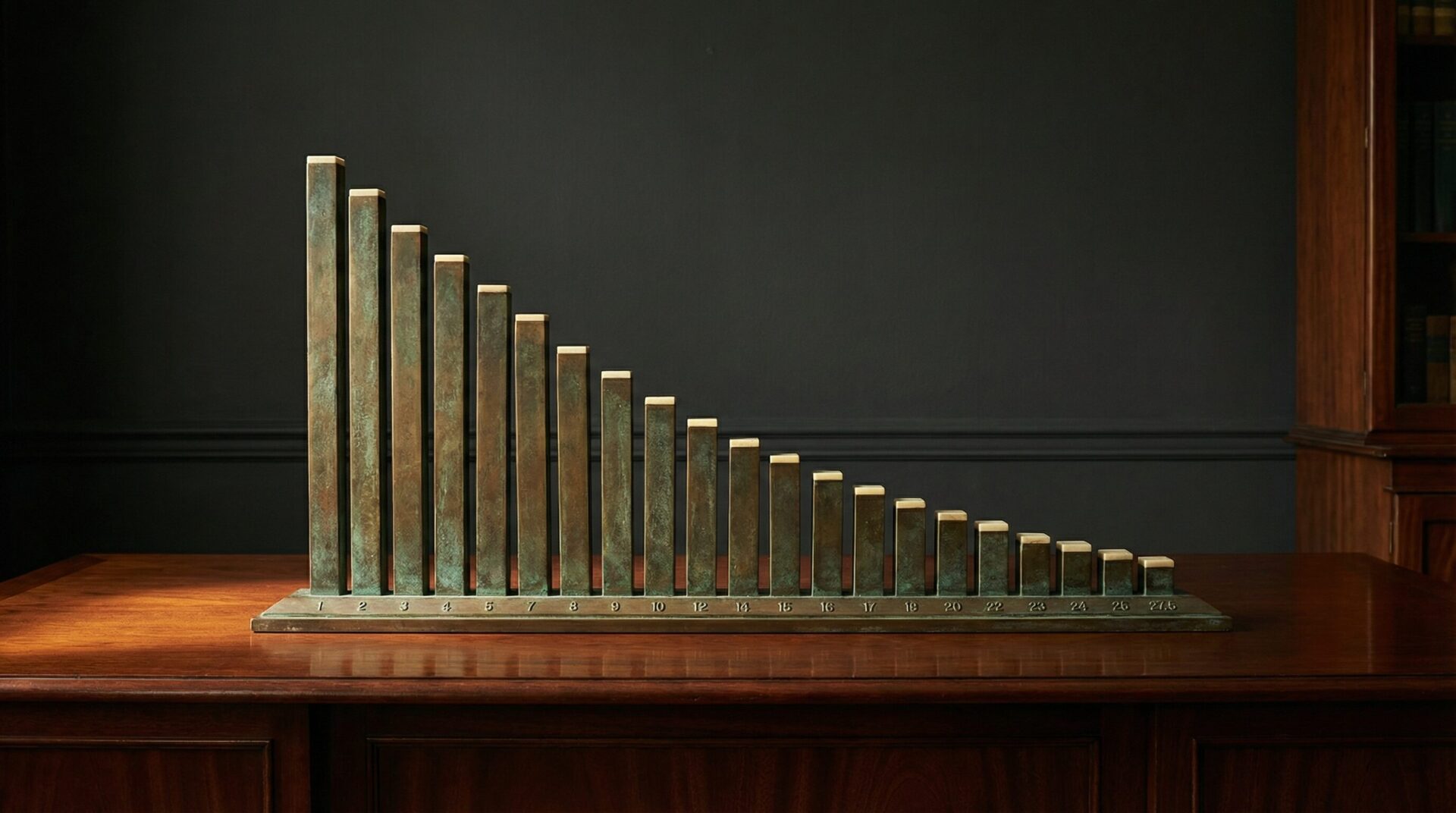
- 27.5 years — Residential rental property (apartments, multifamily, single-family rentals)
- 39 years — Nonresidential real property (office buildings, retail centers, industrial warehouses, self-storage facilities)
Personal property within the building—carpeting, appliances, certain fixtures—may qualify for shorter recovery periods of 5, 7, or 15 years under MACRS. This is the foundation of cost segregation studies, which reclassify building components to accelerate depreciation deductions into the early years of ownership.
Depreciable Basis
Your depreciable basis is the portion of the property’s cost that can be depreciated. It equals the total acquisition cost (purchase price plus closing costs, title insurance, legal fees, and transfer taxes) minus the value allocated to land. Land does not wear out, so the IRS excludes it from depreciation.
The land-to-building allocation is a frequent source of dispute with the IRS. Common methods include using the county tax assessor’s allocation, obtaining an independent appraisal, or referencing comparable sales data. For commercial properties, the building typically represents 75% to 85% of the total value, though this varies significantly by market and property type. An investor purchasing a $10 million office building where the land is assessed at 20% of value would have a depreciable basis of $8 million.
Useful Life
The useful life is the recovery period the IRS assigns to each asset class. For real estate, these periods are fixed—you cannot elect a shorter or longer period for the building itself. However, through cost segregation, you can identify building components that qualify for shorter useful lives (5-year, 7-year, or 15-year property), dramatically accelerating your deductions in the early years.
According to Investopedia’s MACRS overview, the system provides specific percentage tables published by the IRS that dictate exactly how much you can depreciate each year based on the asset class, method, and convention.
How to Calculate Depreciation for Your Property
The straight-line method used for real property under MACRS is straightforward: divide the depreciable basis by the recovery period. Let’s walk through concrete examples for both residential and commercial properties.
Example 1: Residential Rental Property (27.5 Years)
Assume you purchase a 24-unit apartment complex for $5,000,000 in June. Closing costs add $75,000. The county assessor allocates 18% to land.
- Total acquisition cost: $5,000,000 + $75,000 = $5,075,000
- Land value (18%): $5,075,000 × 0.18 = $913,500
- Depreciable basis: $5,075,000 − $913,500 = $4,161,500
- Annual depreciation: $4,161,500 ÷ 27.5 = $151,327 per year
In Year 1, the mid-month convention applies. Since the property was placed in service in June, you get 6.5 months of depreciation: $151,327 × (6.5 ÷ 12) = $81,969 in the first year. Every subsequent full year yields the complete $151,327 deduction.
At the top federal tax rate of 37%, this annual deduction saves the investor approximately $55,991 per year in federal taxes alone—money that stays in the investor’s pocket to compound, reinvest, or deploy into additional acquisitions.
Example 2: Commercial Property (39 Years)
Now consider a Class A office building purchased for $12,000,000 in March. Closing costs total $180,000. An independent appraisal allocates 22% to land.
- Total acquisition cost: $12,000,000 + $180,000 = $12,180,000
- Land value (22%): $12,180,000 × 0.22 = $2,679,600
- Depreciable basis: $12,180,000 − $2,679,600 = $9,500,400
- Annual depreciation: $9,500,400 ÷ 39 = $243,600 per year
Year 1 with a March acquisition gives you 9.5 months: $243,600 × (9.5 ÷ 12) = $192,850. Each full subsequent year provides the $243,600 deduction.
Notice the significant difference between the two recovery periods. The residential property generates roughly 42% more depreciation per year relative to its basis compared to the commercial property. This is one reason multifamily assets are so attractive from a tax perspective—the shorter recovery period front-loads more deductions into the investor’s holding period.
Accelerating Depreciation with Cost Segregation
The examples above use the standard straight-line approach for the entire building. In practice, a cost segregation study can reclassify 20% to 40% of a commercial building’s cost into shorter-lived asset categories. Electrical systems, plumbing, specialized lighting, parking lot paving, and landscaping are common candidates for reclassification into 5-year, 7-year, or 15-year property.
Combined with bonus depreciation (which allows 100% first-year deduction for property with a recovery period of 20 years or less, though the rate is phasing down from 2023 through 2027), cost segregation can generate first-year deductions worth millions on a single acquisition. For the $12 million office building above, a well-executed cost segregation study might reclassify $3 million of components into shorter-lived categories, generating an additional $1.5 to $2 million in first-year deductions under current bonus depreciation rules.
The Elephant in the Room: Depreciation Recapture
Every dollar of depreciation you claim reduces your adjusted basis in the property. When you sell, the IRS wants that depreciation back—and it taxes the recaptured amount at a special rate under IRC Section 1250. This is depreciation recapture, and it applies whether or not you actually claimed the depreciation deductions. The IRS assumes you took them, so failing to claim depreciation does not avoid recapture.

How Recapture Is Calculated
For real property, depreciation recapture is taxed at a maximum federal rate of 25% under the unrecaptured Section 1250 gain rules. This is higher than the 20% long-term capital gains rate that applies to the remaining appreciation, making recapture the more expensive component of the tax bill upon sale.
Let’s walk through a detailed example using our apartment complex from earlier.
Full Recapture Example
Purchase:
- Acquisition cost: $5,075,000
- Depreciable basis: $4,161,500
- Annual depreciation: $151,327
Sale (after 10 years of ownership):
- Sale price: $7,200,000
- Selling costs (5%): $360,000
- Net sale proceeds: $6,840,000
Calculating adjusted basis:
- Total depreciation claimed (10 years): $151,327 × 10 = $1,513,270
- Adjusted basis: $5,075,000 − $1,513,270 = $3,561,730
Total gain on sale:
- Net proceeds − Adjusted basis = $6,840,000 − $3,561,730 = $3,278,270
Breaking the gain into two components:
| Component | Amount | Tax Rate | Tax Due |
|---|---|---|---|
| Depreciation Recapture (Section 1250) | $1,513,270 | 25% | $378,318 |
| Capital Gain (appreciation above original basis) | $1,765,000 | 20% | $353,000 |
| Net Investment Income Tax (NIIT) | $3,278,270 | 3.8% | $124,574 |
| Total Federal Tax | $855,892 |
That $855,892 federal tax bill represents approximately 12.5% of the net sale proceeds—a significant but manageable amount. However, add state taxes in a jurisdiction like California (up to 13.3% on capital gains), and the total tax on this sale could approach $1.3 million. This is why exit tax planning is essential before listing a property for sale, not after.
The Cost Segregation Recapture Wrinkle
If you performed a cost segregation study and reclassified personal property components (5-year and 7-year assets), the recapture rules are even more aggressive. Under IRC Section 1245, personal property recapture is taxed at ordinary income rates—up to 37% federal—rather than the 25% Section 1250 rate. This is a critical consideration when evaluating the net benefit of cost segregation: the accelerated deductions provide substantial time-value-of-money benefits during ownership, but the recapture bill upon sale is steeper for those reclassified components.
Strategies to Minimize Depreciation Recapture
The goal is not to avoid depreciation—the deductions are too valuable. The goal is to manage the recapture liability so it does not consume an outsized portion of your disposition proceeds. Here are the primary strategies sophisticated investors use.
1031 Exchange: Defer Indefinitely
A 1031 exchange under IRC Section 1031 allows you to defer all taxes—both capital gains and depreciation recapture—by exchanging your relinquished property for a like-kind replacement property of equal or greater value. The deferred depreciation carries over to the replacement property’s basis, pushing the recapture liability further into the future.
Many investors execute serial 1031 exchanges throughout their careers, deferring recapture across multiple properties for decades. Upon death, the property receives a stepped-up basis under IRC Section 1014, eliminating the deferred recapture entirely. This “swap till you drop” strategy is one of the most tax-efficient wealth-building approaches available in real estate.
Installment Sale: Spread the Pain
Under IRC Section 453, an installment sale allows you to recognize gain proportionally as you receive payments rather than all at once. While depreciation recapture must be recognized in the year of sale regardless of payment schedule (this is a common trap), the remaining capital gain can be spread over the installment period. This can keep you in a lower bracket for the capital gain portion and reduce exposure to the NIIT.
Qualified Opportunity Zone Funds
While the original deferral benefits of Qualified Opportunity Zone (QOZ) investments have largely expired for new investments, capital gains (including recapture) reinvested in a QOZ fund within 180 days of a sale may still qualify for the permanent exclusion of gain on the QOZ investment itself if held for 10 or more years. This is a specialized strategy that requires careful structuring and compliance with IRS regulations under IRC Sections 1400Z-1 and 1400Z-2.
Charitable Remainder Trust (CRT)
Transferring a property to a Charitable Remainder Trust before sale can eliminate the immediate recapture tax. The CRT sells the property tax-free and invests the full proceeds, paying you (the donor) an income stream for life or a term of years. Recapture is recognized gradually as distributions are made, spreading the tax over many years and potentially at lower effective rates. This strategy works best for investors who are charitably inclined and willing to give up the remainder value to a qualified charity.
Hold Until Death: The Stepped-Up Basis
Under current law, when a property owner dies, the property’s basis is stepped up to fair market value at the date of death. All accumulated depreciation—and the corresponding recapture liability—is permanently eliminated. For investors building a legacy portfolio, this is the ultimate recapture avoidance strategy. Combined with proper tax planning, a hold-until-death approach can preserve millions in family wealth across generations.

Offset with Losses from Other Properties
If you have suspended passive losses from other rental activities, a fully taxable sale releases those losses, which can offset the recapture gain. Investors with large, diversified portfolios can strategically time dispositions to coincide with properties generating significant passive losses, effectively netting the recapture against those losses and reducing or eliminating the recapture tax.
Putting It All Together: A Depreciation Decision Framework
Every commercial real estate acquisition should include a depreciation plan that addresses three phases: the acquisition, the hold period, and the exit.
At acquisition: Determine the depreciable basis with a defensible land allocation. Evaluate whether a cost segregation study is warranted—generally, it is for properties with a depreciable basis exceeding $1 million. Assess whether bonus depreciation timing affects your purchase date decision.
During the hold period: Maximize depreciation deductions by ensuring your CPA claims all available deductions, including improvements and capital expenditures that create additional depreciable basis. Track your cumulative depreciation and adjusted basis annually so you always know your recapture exposure.
Before exit: Model the tax consequences of a straight sale versus a 1031 exchange, installment sale, or CRT at least 12 to 18 months before listing. The difference in after-tax proceeds between a well-planned and poorly planned exit can exceed 15% of the sale price. Engage your tax advisor early enough to implement the optimal structure.
Depreciation is not a single decision—it is a continuous process that shapes the after-tax return of every property in your portfolio. The investors who treat it as a strategic lever, rather than a line item their CPA handles, consistently outperform those who do not.
Frequently Asked Questions
Can I depreciate land improvements separately from the building?
Yes. Land improvements—such as parking lots, sidewalks, fencing, landscaping, and drainage systems—are classified as 15-year MACRS property, separate from both the building (27.5 or 39 years) and the land (non-depreciable). A cost segregation study typically identifies and reclassifies these components, allowing you to depreciate them over a significantly shorter period. Under current bonus depreciation rules, 15-year land improvements may also qualify for accelerated first-year deductions, making them particularly valuable for investors seeking front-loaded tax benefits.
What happens if I never claimed depreciation on my rental property?
The IRS taxes you as if you did. Under the “allowed or allowable” rule (IRC Section 1016), your adjusted basis is reduced by the depreciation you were entitled to claim, regardless of whether you actually took the deductions. This means you face recapture on depreciation you never benefited from. If you discover unclaimed depreciation, you can file Form 3115 (Application for Change in Accounting Method) to catch up on missed deductions in a single year without amending prior returns. This is a common correction, and the IRS generally grants automatic consent for this change.
Does a 1031 exchange eliminate depreciation recapture permanently?
A 1031 exchange defers depreciation recapture—it does not eliminate it. The deferred recapture carries over to the replacement property’s basis, so if you eventually sell the replacement property in a taxable transaction, you will owe recapture on the accumulated depreciation from both properties. However, if you continue exchanging properties and ultimately hold until death, the stepped-up basis at death permanently eliminates the deferred recapture. Learn more in our complete guide to 1031 exchanges for commercial real estate.
How does bonus depreciation interact with real estate depreciation?
Bonus depreciation applies to assets with a recovery period of 20 years or less—so it does not apply to the building itself (27.5 or 39 years), but it does apply to personal property and land improvements identified through a cost segregation study. The Tax Cuts and Jobs Act of 2017 allowed 100% bonus depreciation through 2022, with a phase-down of 20 percentage points per year through 2027 (80% in 2023, 60% in 2024, 40% in 2025, 20% in 2026, and 0% in 2027). Timing your acquisition and cost segregation study relative to these phase-down thresholds can significantly impact first-year deductions.
Is there a limit on how much depreciation I can deduct in a single year?
For real property held as an investment or rental, there is no cap on the depreciation amount itself. However, your ability to use the deduction depends on your tax status. Passive investors are limited by the passive activity loss rules—depreciation losses from rental activities can generally only offset passive income unless you qualify as a real estate professional under IRC Section 469(c)(7). Real estate professionals who materially participate can deduct unlimited depreciation losses against all types of income, including wages and business income. This distinction makes real estate professional status one of the most valuable tax classifications for high-net-worth investors with significant real estate holdings.

